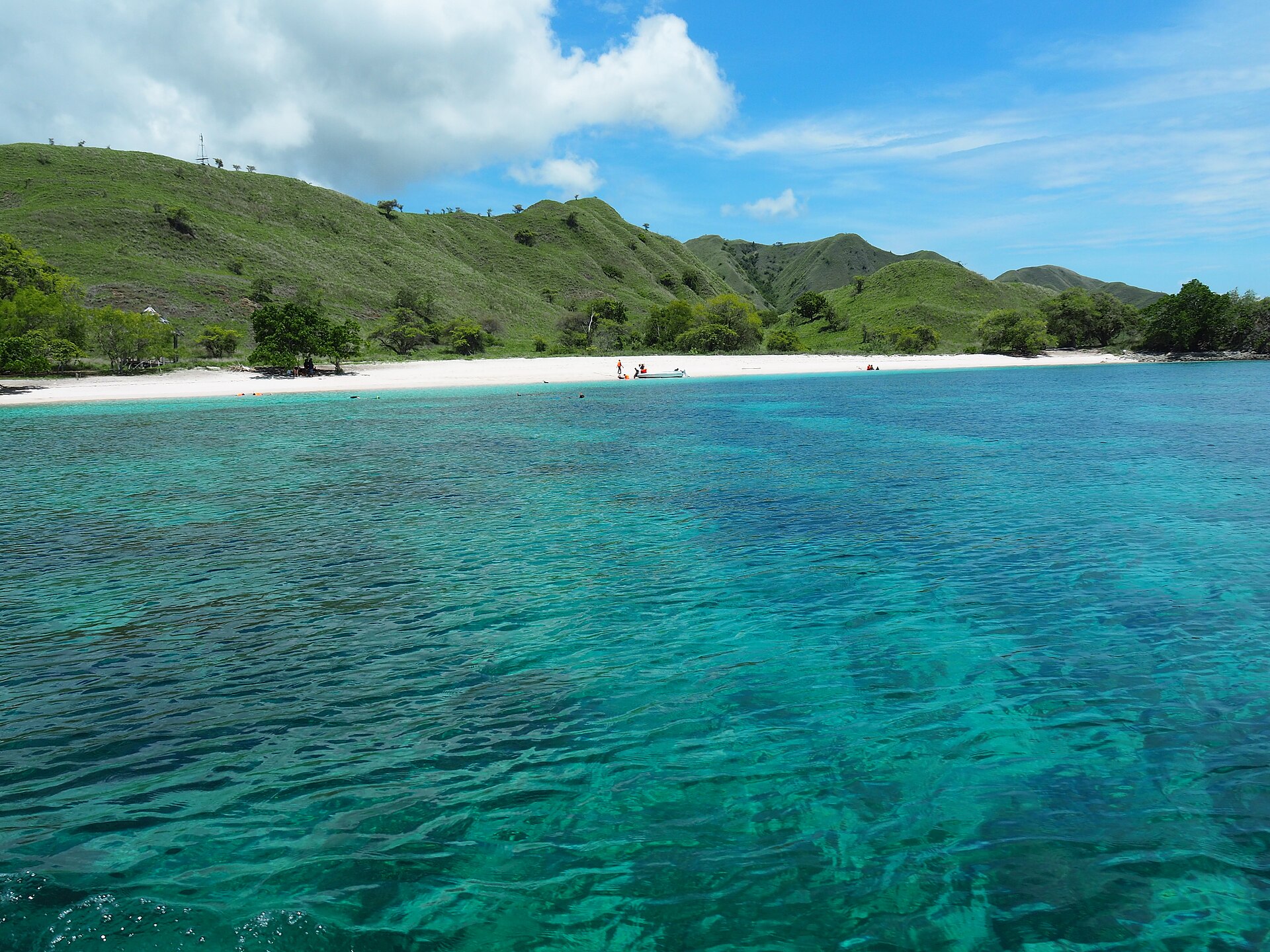
The 10 must-visit islands of Indonesia, from Bali, Nusa Penida, and Komodo to Raja Ampat, Java, and Sumatra. What each island is best for, how hard it is to reach, and how to choose.
 Door Asik Travel Editorial7/14/202612 min read
Indonesia has more than seventeen thousand islands, so any list of the ones you have to see is really a list of where to start. This is not the deep-cut, hard-to-reach roll call, that is a different guide, but the ten islands that most reward a first or second trip: the icons everyone comes for, plus a couple you may not have on your radar yet. Between them they cover the whole spread of what makes Indonesia special, the dragons, the reefs, the volcanoes, the beaches, and the culture, and they are arranged here roughly from the easiest to reach to the most remote.
A word on how to use it: do not try to see all ten in one trip. Indonesia is enormous and the connections eat time, so pick two or three that match what you want and go deep. If you are torn on where to begin, our best islands for a first trip guide is the place to start, and the island-hopping routes guide shows how to link them together by boat.
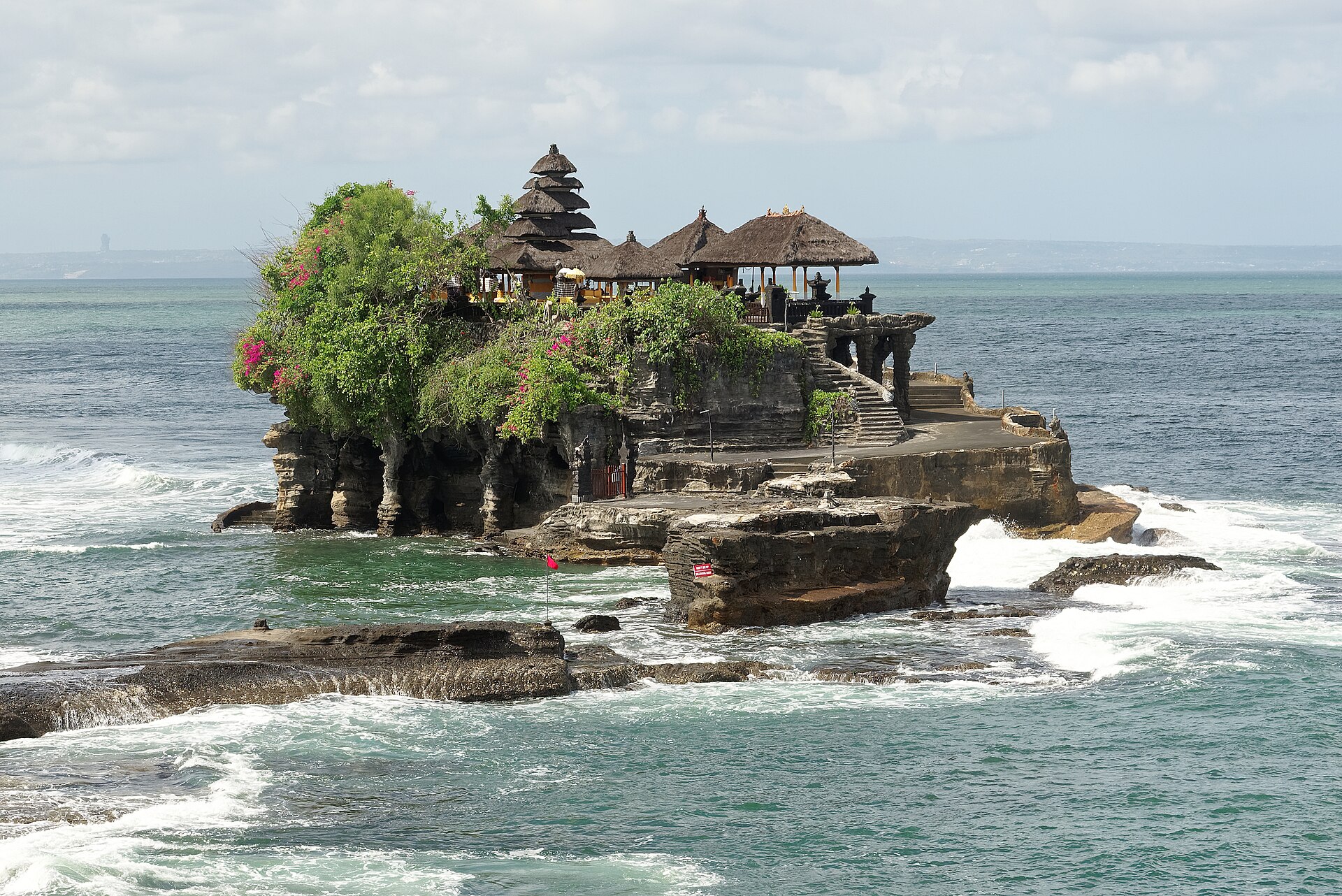
It is on every list because it earns it. Bali packs an improbable amount into one small island: surf beaches and rice terraces, cliff-top temples like Uluwatu and the sea temple of Tanah Lot, the artistic heart of Ubud, world-class food, and a Hindu culture that colors daily life with offerings and ceremonies. Yes, the south is busy and yes, it is the most touristed corner of Indonesia, but there is a reason. Base yourself away from the Kuta crowds, in Ubud, the Bukit peninsula, or the quieter east and north, and Bali still delivers. For most people it is the gateway to the rest of the country, the hub you fly into and hop out from.
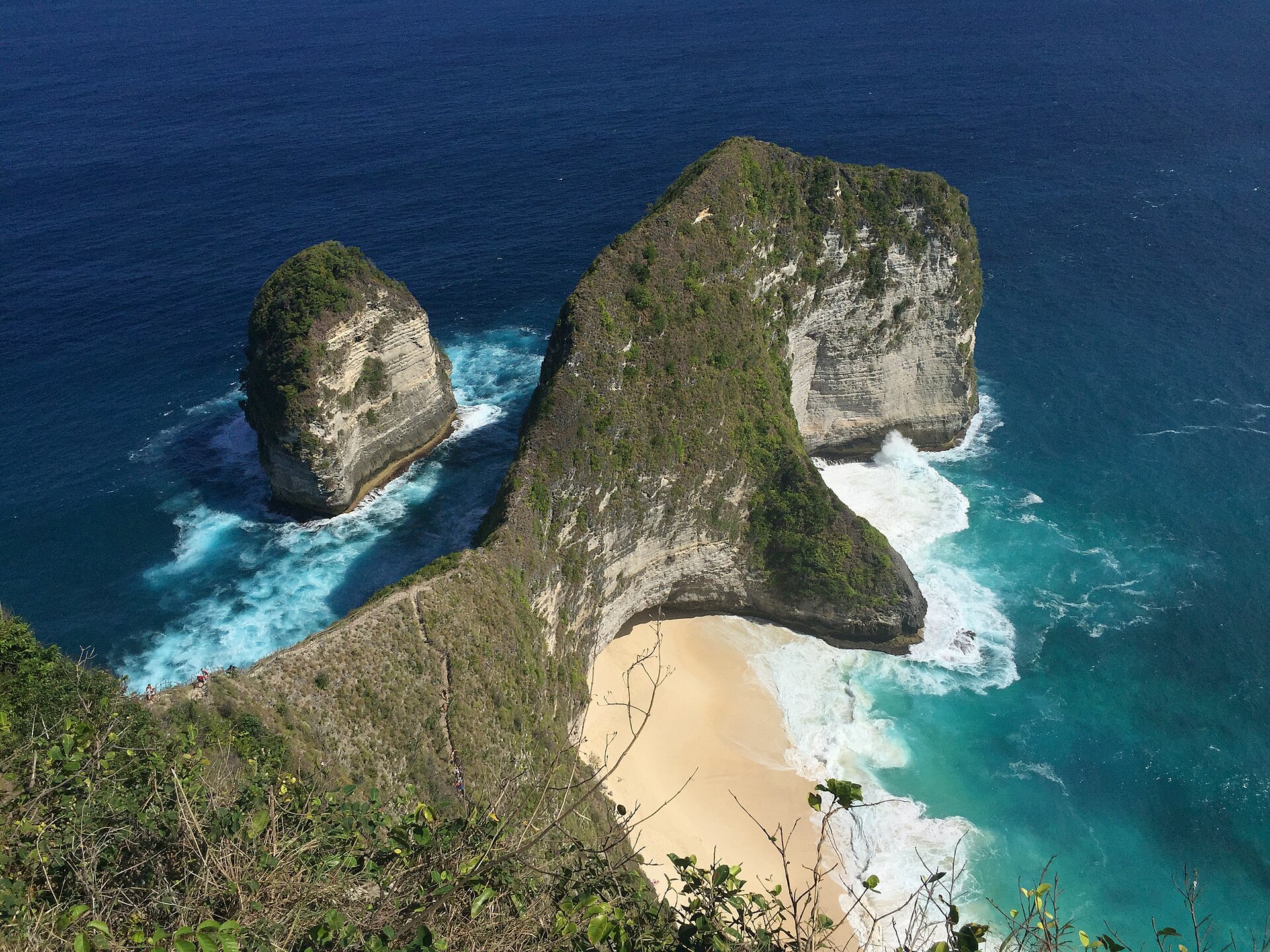
A thirty to forty-five minute fast boat from Bali lands you on Nusa Penida, and it feels like a wilder cousin. This is the island of the postcard: the T-rex-shaped cliff at Kelingking Beach, the natural arch of Broken Beach, and manta rays you can snorkel with year round at Manta Point. It is bigger and rougher than day-trippers expect, with steep, potholed roads, so hire a driver rather than a scooter unless you ride well, and stay a night or two to catch the viewpoints before the day boats arrive. Along with neighbors Lembongan and Ceningan, it is the easiest island hop in the country, covered in our island-hopping guide.
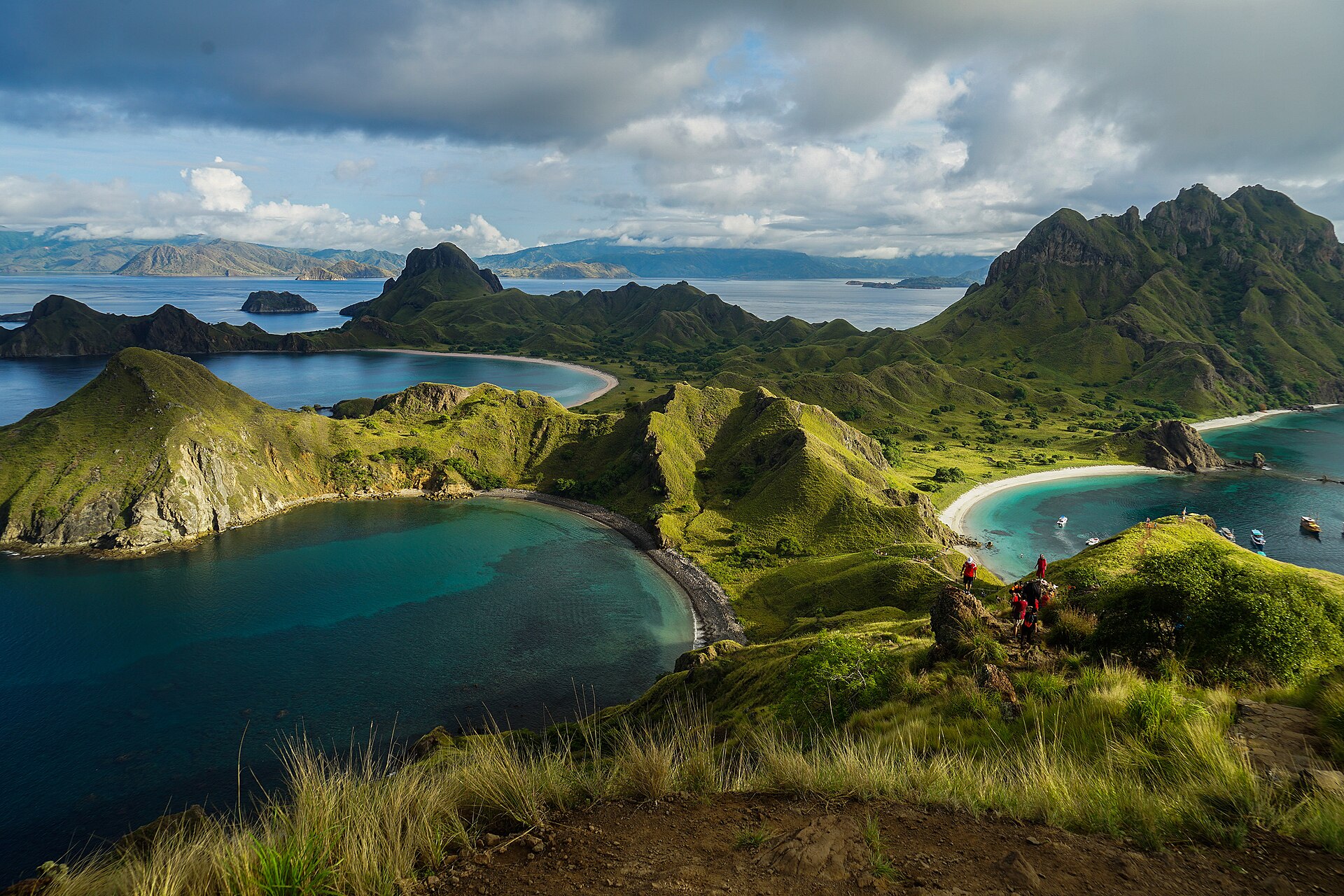
Fly to Labuan Bajo on Flores and you are at the gateway to Komodo National Park, one of the most spectacular island clusters on Earth. This is where you see the Komodo dragons in the wild, climb Padar for the famous three-bay view, walk a pink-sand beach, and snorkel with mantas, all from a boat. You can do it as a day trip or a multi-day liveaboard, and which you choose changes the trip; our liveaboard versus day trip guide weighs it up, and the Komodo National Park guide covers the park itself. Flores keeps going east, too, to the tri-colored crater lakes of Kelimutu and traditional villages, so pair the boats with an overland stretch if you have the days.
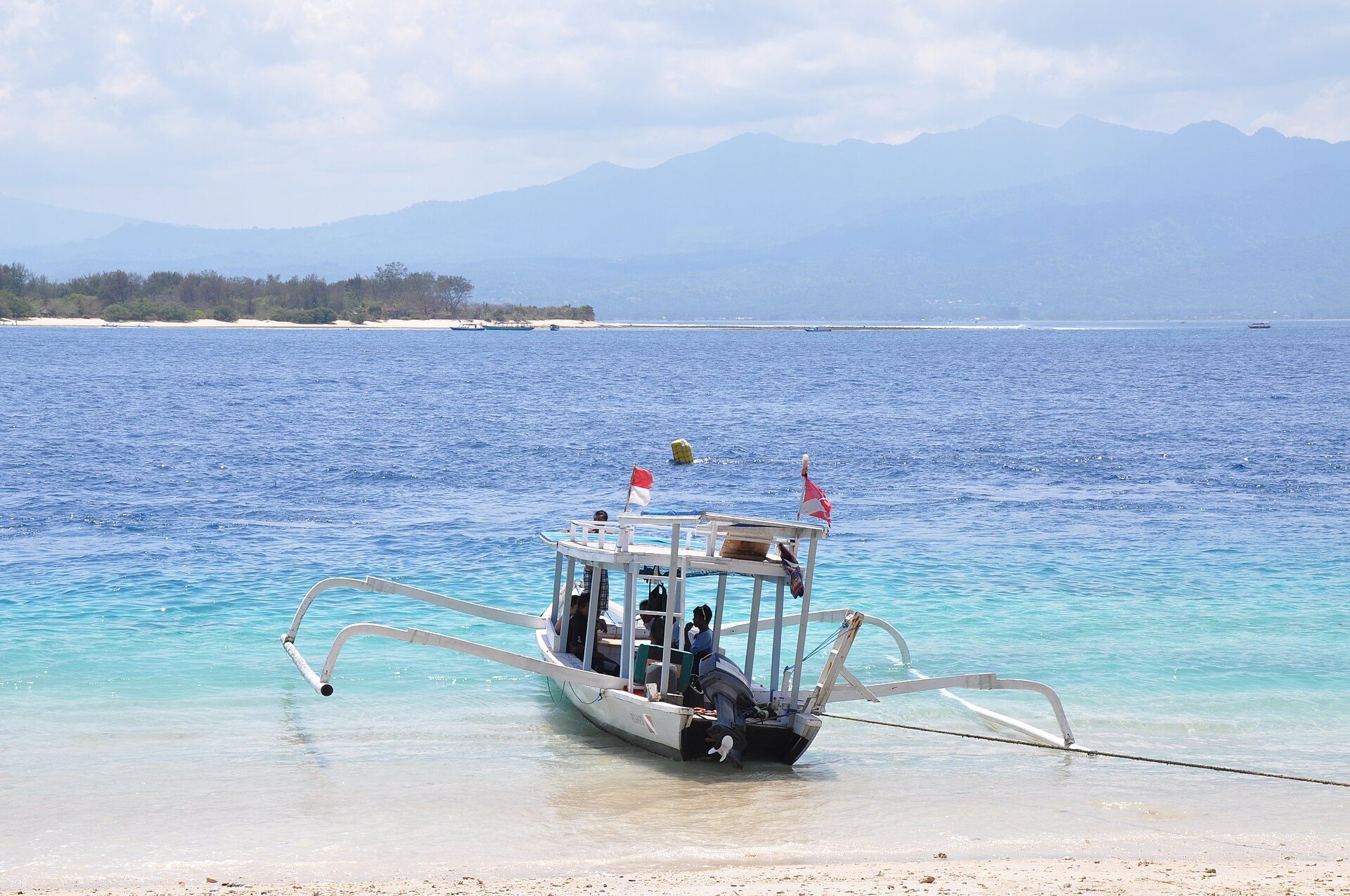
One island east of Bali, Lombok is drier, quieter, and rawer, with the surf beaches of the south around Kuta, waterfalls in the hills, and the towering volcano Rinjani for those who want a serious multi-day trek. Off its northwest coast float the three Gili islands, car-free specks of white sand and turquoise water where the only traffic is bicycles and pony carts: Trawangan for buzz, Air for balance, Meno for near-total quiet. Together they make one of the most satisfying beginner routes in the country. Our Gili Islands guide and the Lombok and Gili itinerary lay out how to split your days.
At the far end of the country, off West Papua, Raja Ampat holds the richest marine biodiversity on the planet. It is the hardest of the icons to reach, a long flight to Sorong, a ferry, then a boat to your homestay or liveaboard, but for divers and snorkelers it is the trip of a lifetime: karst islands rising from impossibly clear water, reefs alive with fish, and the famous viewpoints of Piaynemo and Wayag. This is one you build up to rather than start with, and it rewards a week or more. Our Raja Ampat travel guide covers homestays versus liveaboards, the permits, and the timing.
Indonesia’s most populous island is where most people never think to linger, and they are missing one of the great volcano landscapes on Earth. Java is home to the surreal turquoise flames and dawn crater of Ijen, the classic sunrise over Mount Bromo rising from a sea of sand, and the vast ninth-century Buddhist temple of Borobudur, the largest in the world. Add the sultan’s city of Yogyakarta, batik and gamelan and street food, and Java is a whole trip in itself. It is easy to reach and cheap on the ground, and it makes a powerful contrast to the beaches, all fire and history rather than reef and sand.
Big, wild, and adventurous, Sumatra is where you go for the jungle. This is one of the last places on Earth to see orangutans in the wild, around Bukit Lawang, and it holds the giant volcanic caldera of Lake Toba, the largest lake in Southeast Asia, with its own island and Batak culture in the middle. Sumatra is less set up for tourism than Bali or Java, the distances are long and the travel slower, but for wildlife and raw nature it is unmatched among the western islands. It suits travelers who want the trip to feel like an expedition rather than a holiday.
Between Lombok and Flores, Sumbawa is the island almost everyone drives or flies straight over, which is exactly its appeal. It is dry, rugged, and empty, with world-class, uncrowded surf breaks like Lakey Peak, the near-private forested island of Moyo just off its coast, and the volcano Tambora, whose 1815 eruption was the largest in recorded history. Surfers know parts of it; almost no one else stops. Our Moyo Island guide and the Sumbawa travel guide cover an island that deserves far more attention than it gets.
South of Flores, Sumba is a big, wild, dry island that feels like a different country: rolling savannah hills, empty surf beaches that run for miles, hilltop villages of tall thatched clan houses and megalithic tombs, and a warrior culture that still stages the Pasola festival on horseback. A few famous resorts have opened, but the island stays overwhelmingly rural and unvisited. It is one of the most distinctive places in the whole archipelago. It features in our hidden gems of Indonesia guide, alongside the other places most tourists never reach.
The strangest-shaped of the big islands hides some of Indonesia’s most remarkable culture and diving. In the central highlands of Tana Toraja, elaborate funeral ceremonies and cliff-face graves draw the curious, while off its coasts lie world-class dive sites at Bunaken and Wakatobi and the quiet, jellyfish-lake magic of the Togean Islands. Sulawesi is green, mountainous, and deeply traditional, a world away from the beach-holiday image of Indonesia, and it rewards travelers willing to travel further for something different. Our Central Sulawesi itinerary and the Togean Islands guide get you started.
The honest way to use this list is to sort it by what you actually want. Chasing reefs and big marine life? Raja Ampat, Komodo, and Sulawesi. After easy, beautiful beach time? Bali, the Gilis, and Nusa Penida. Drawn to volcanoes and history? Java. Wildlife and jungle? Sumatra. Empty and off the radar? Sumbawa and Sumba. Very few trips fit more than two or three of these together without becoming a blur of airports, so the skill is picking the right cluster and giving it time.
| Island | Best for | Effort to reach |
|---|---|---|
| Bali | Culture, food, the easy all-rounder | Easy (main international hub) |
| Nusa Penida | Cliffs, mantas, an easy first hop | Easy (fast boat from Bali) |
| Komodo / Flores | Dragons, boat trips, Padar | Easy (fly to Labuan Bajo) |
| Lombok & Gilis | Beaches, easy island life, Rinjani trek | Easy (boat or flight from Bali) |
| Raja Ampat | The best diving on Earth | Expedition (flight + ferry + boat) |
| Java | Volcanoes, Borobudur, history | Easy (flights, cheap overland) |
| Sumatra | Orangutans, jungle, Lake Toba | Moderate (long distances) |
| Sumbawa | Surf, Moyo, empty coast | Moderate (overland from Lombok) |
| Sumba | Savannah, culture, empty beaches | Moderate (flight, then a car) |
| Sulawesi | Toraja culture, diving, Togeans | Moderate to hard (flights + roads) |
For almost all of these, the dry season, roughly April to October, is the sweet spot: calmer seas, clearer water, and more reliable boats, which matters most for the remote ones. The real work of an Indonesian island trip is the joins, the flights that have to line up with ferries that do not sell tickets online, so build in buffer days and book the key connections ahead. If you would rather hand that over, you can plan a trip with us or browse our small-group and private trips. To widen the picture beyond islands, our Indonesia beyond Bali guide brings in the mainland too.
Cover photo: Pink Beach, Komodo National Park, via Wikimedia Commons (CC BY-SA 2.0).
Geschreven door
Asik Travel Editorial
Local travel editors
We write from the islands we sell, with first-hand notes from our guides and operators.
The icons are Bali, Nusa Penida, Komodo and the Flores islands, Lombok and the Gili Islands, and Raja Ampat, joined by the bigger islands of Java (volcanoes and Borobudur), Sumatra (orangutans and Lake Toba), Sulawesi (diving and Toraja culture), and the quieter Sumbawa and Sumba. Which ones suit you depends on whether you want reefs, beaches, volcanoes, wildlife, or empty wilderness.
Realistically two or three, not more. Indonesia is enormous and the connections between islands eat time, so trying to see five means spending the trip in transit. A better two-week plan is to pick a cluster, say Bali plus Komodo, or Java’s volcanoes plus a stretch of islands, and go deep rather than wide.
Bali is the easiest and most rewarding starting point, with the best infrastructure and quick hops to Nusa Penida, the Gilis, and Komodo. It works as a hub for a first trip. If you want to go beyond it, add one nearby cluster rather than scattering across the country.
For world-class diving, Raja Ampat is unmatched, with Komodo and Sulawesi (Bunaken, Wakatobi) close behind. For easy, beautiful beaches, the Gili Islands, Nusa Penida, and Bali are the most accessible. Komodo combines dramatic beaches and manta rays from a boat.
The dry season, roughly April to October, is best for almost every island: calmer seas, clearer water for snorkeling and diving, and more reliable boats. This matters most for remote islands like Raja Ampat and the Togeans, where the wet season makes crossings rough and can cancel boats.
Both. Domestic flights connect the main hubs (Bali, Lombok, Labuan Bajo, Sorong, Java, Sumatra, Sulawesi), while ferries and fast boats cover the shorter hops and reach the smaller islands. The catch is that boats and flights do not always connect neatly, so build in buffer days and book the key legs ahead.